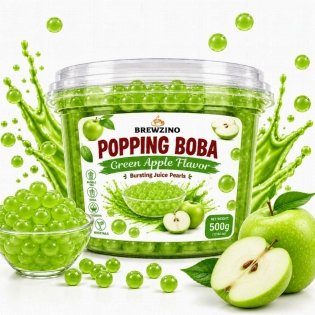
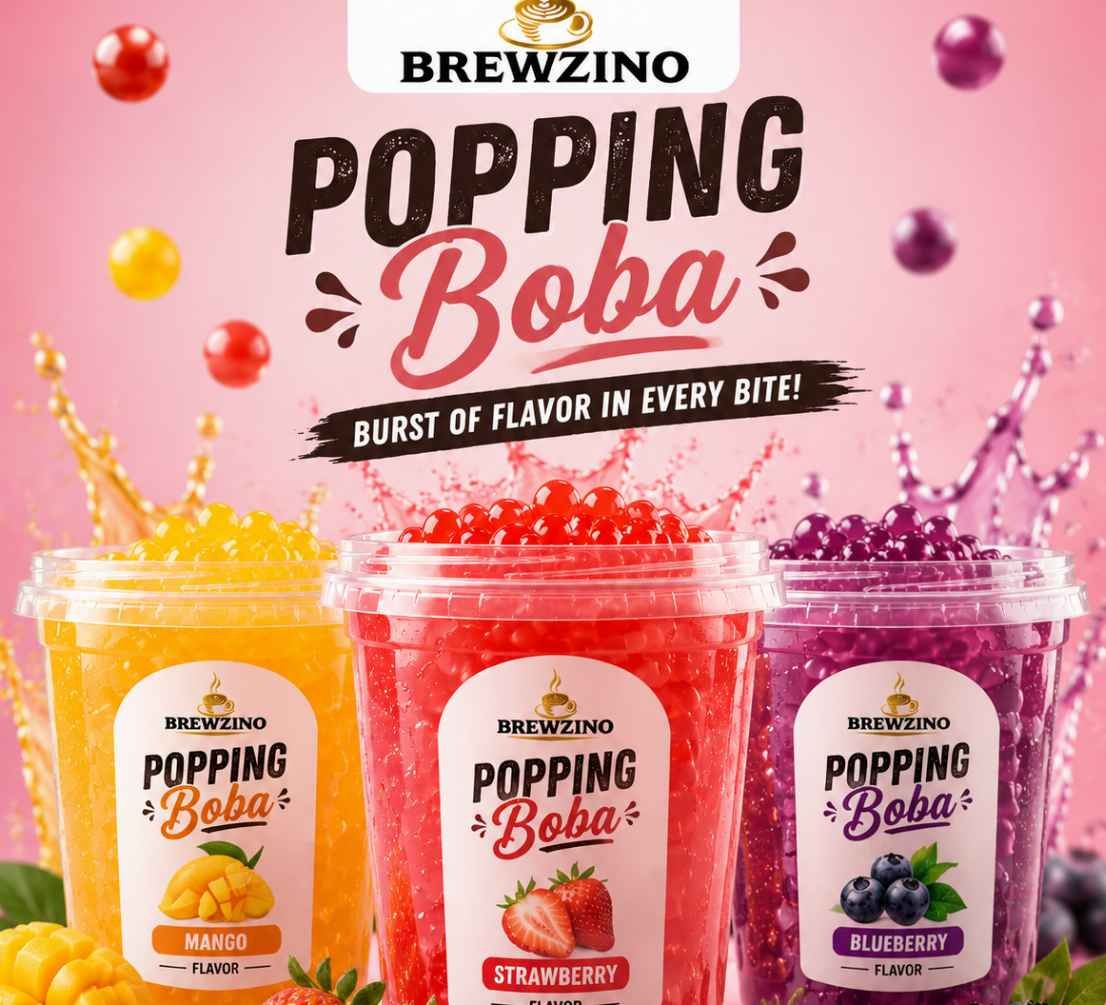
Ask a café owner in Mysore where their popping boba pearls actually come from, and you'll usually get a shrug and a supplier's phone number, not a factory name. That's not carelessness — it's just how the category works almost everywhere in India right now. Someone sells you a carton, you sell it as a drink topping, and nobody in that chain has ever actually seen where the pearls are made. For most products that wouldn't matter much. For popping boba, it matters a lot, and Mysore's fast-growing café scene is about to run into that problem at scale.
The real problem: everyone's selling, almost nobody's manufacturing
Mysore's transformation over the last five or six years has been genuinely fast. Palace tourism keeps a steady stream of visitors moving through the city year-round, Mysuru's IT and education crowd has grown a real specialty-café culture of its own, and bubble tea — popping boba especially — has become one of the more visible new categories on café menus near Devaraja Market, around Vijayanagar, and in the newer mall food courts. Demand created supply, fast. What it didn't create was manufacturing capability, because that's a completely different skill set from running a distribution business.
Here's the uncomfortable truth most Mysore café owners haven't had explained to them: popping boba pearls require real food-tech capability to make — a thin, edible membrane formed around a liquid centre through a process called spherification. It's not a recipe you can improvise in a commercial kitchen, and it's not something a repackaging operation can fake convincingly for long. Very few factories in India have actually built this capability. Most of what moves through Karnataka's bubble tea supply chain — and this is true of almost every state, not a knock on Mysore specifically — is imported stock, repackaged stock, or product that's changed hands two or three times before it reaches a café's storeroom.
That matters because every one of those extra steps costs the pearls something. Time in transit. Time sitting in a distributor's warehouse. Temperature swings during a Karnataka summer that a reseller has no real control over once the product's out of the manufacturer's hands. By the time a Mysore café serves it to a customer, the "pop" that made the product interesting in the first place has often already started to fade. Multiply that across a whole season of orders, and a café owner ends up quietly training their own customers to expect a mediocre version of the product, without ever realising a better version exists just a few hours away.
Why genuine manufacturing is this rare, and why it won't fix itself
It's worth being specific about why this doesn't just sort itself out over time, because "the market will catch up" is the assumption most café owners are quietly making. Spherification at commercial scale requires food-grade sodium alginate and calcium lactate handled at precise ratios, controlled bath temperatures, and packaging that protects a genuinely fragile product through transit — get any of those wrong and you get pearls that either don't burst properly or burst too early and turn to mush in the bag. This isn't a two-week skill to pick up. Factories that do it well have usually spent years getting the process consistent at volume, and most Indian food manufacturers who could theoretically enter the category have decided it's not worth the investment when reselling imported stock is easier and, in the short term, more profitable.
The result is a strange market structure: dozens of "suppliers" in every major Indian city, competing hard on price, and maybe a handful of actual manufacturers behind all of them nationally. Mysore isn't an exception to this — if anything, as a Tier-2 city, it's more exposed to it, because the reseller layer tends to be thicker the further you get from wherever the actual factories are. A Mysore café owner comparing five quotes from five different "suppliers" is very often comparing five markups on the exact same underlying batch, with no way to tell just from the packaging.
This also explains why price alone is such a poor way to choose a popping boba supplier. A slightly cheaper quote from a reseller several steps removed from the factory isn't a bargain — it usually just means a longer, less accountable chain between you and the actual production line, and no real insight into how long that specific batch has already been sitting in transit before it reached you.
Why Coimbatore, specifically, and why the distance doesn't matter as much as it sounds
Coimbatore sits roughly 215 kilometres from Mysore — a comfortable 5-hour drive by road, well inside the range most FMCG and food distribution networks treat as routine, not exceptional. Brewzino manufactures out of Coimbatore for a reason that has nothing to do with convenience and everything to do with infrastructure: the city has both an international airport and a major railway junction, which means a factory based there can dispatch nationally on a predictable schedule, not just serve its own backyard.
For a Mysore café, that distance argument actually flips once you look at it honestly. If your current "local" supplier isn't a manufacturer, their stock is already travelling in from somewhere — very possibly from the same part of the country a direct Coimbatore relationship would connect you to, just with a reseller's markup and an extra unknown number of weeks added on top before it reaches you. Buying direct from Coimbatore doesn't mean a longer wait than buying "local." It frequently means a shorter one, because you've removed a step, not added one.
There's a second, less obvious benefit to this specific route: Coimbatore to Mysore runs largely along established national highway and rail corridors that food distributors already use daily for other categories, which means dispatch isn't relying on a niche courier network that might deprioritise a small order. It's the same infrastructure that moves textiles, spices, and packaged foods through the region every day — popping boba just rides along it.
Mysore itself isn't poorly connected either — Mysore Airport at Mandakalli handles regional flights, and Mysuru Junction railway station sits close to the city centre near the Mysore Palace and Devaraja Market, which means a Coimbatore shipment arriving into the city still has a short, well-served last-mile route to reach a café near Vijayanagar, Saraswathipuram, or the Chamundi Hills side of town — not a long haul down unpredictable local roads once it's already reached Mysore.
What this actually looks like for an independent café or dessert counter
If you're running a single café or a dessert counter in Mysore, the popping boba conversation usually comes down to two things: freshness and price. On freshness, a batch that left a factory this week and reached you through one direct shipment is going to out-perform one that sat in a Bangalore or Mysore reseller's warehouse for a month before you got it — the pop is sharper, the texture holds up better in a drink that a customer might not finish for twenty minutes, and the colour stays vivid instead of dulling slightly, which matters more than owners realise when half the appeal is how the drink photographs.
On price, cutting out a reseller's margin usually means either a better cost per kilo at the same order size, or the ability to order smaller quantities without eating an inflated per-unit price for it. For a single-location café watching cash flow carefully, that's not a small thing — it's the difference between stocking three flavours confidently and stocking one flavour nervously because you can't justify tying up capital in more.
There's also a quieter benefit independent café owners tend not to think about until they've been burned once: knowing exactly who to call when something's wrong with a batch. A reseller two or three steps removed from the factory often can't actually answer questions about storage conditions, shelf life, or what happened during a bad batch — they're passing your complaint up a chain they don't fully control either. A direct manufacturer relationship means there's exactly one place responsible, and one place that can fix it, usually within days rather than weeks of back-and-forth with a distributor who's equally in the dark.
Independent owners also tend to underestimate how much staff confidence matters here. A barista who's been told, correctly, that the pearls they're serving came from a named factory a few hours away — not "somewhere," not "imported, probably" — sells the product differently to a curious customer who asks. That small detail turns into word-of-mouth credibility that a shrug never does.
What this looks like for a traditional tea shop or tea stall testing bubble tea
Mysore has no shortage of tea shops and tea stalls with decades of local goodwill built on filter coffee and chai — and a growing number of them are adding a bubble tea corner because younger customers and tourists are asking for it. This is a genuinely different situation from a purpose-built café, because the staff running the counter usually have zero background in this specific category. They know tea. They don't necessarily know that popping boba needs to be stored differently from tea leaves, or that it has a real shelf-life clock ticking the moment the seal is broken.
This is where buying from a reseller actively hurts a tea shop, because a reseller's job ends at delivery — nobody's coming back to explain proper storage, ideal serving temperature, or how long an opened batch stays good. A tea shop that's investing real shelf space and staff time into a new category deserves a supplier who'll actually walk them through it, even if that supplier isn't sitting in the same city. A short phone call with someone who actually manufactures the product beats a shrug from someone who's never seen the factory.
There's a generational angle here too, worth naming directly. Many Mysore tea stalls are run by an owner who built the business over decades and a younger family member pushing to modernise the menu. Popping boba often becomes the test case for whether that modernisation actually works — get it right, with proper guidance and a product that holds up, and it becomes proof the shop can evolve without losing what made it work in the first place. Get it wrong because nobody explained storage or handling, and it becomes the reason the family decides "these new items don't work for us," closing the door on further menu experiments that might otherwise have paid off.
What this looks like for a bakery adding a drinks or dessert-topping corner
This one surprises people, but it's become a real pattern over the last few years: bakeries expanding beyond bread and cakes into a small drinks or dessert-jar corner, using popping boba as a topping on dessert cups, milkshakes, or a simple bubble tea counter squeezed into existing floor space. It's a low-footprint way to add a new revenue line without expanding the kitchen, and Mysore's bakery scene — spread across areas like Saraswathipuram and the main市 commercial stretches — has plenty of shops well positioned to try it.
The problem is that a bakery's existing supplier relationships are built entirely around flour, dairy, and confectionery ingredients — nobody in that supply chain stocks genuine popping boba, so bakery owners testing the category usually end up buying from whichever beverage-focused reseller they can find, often at a premium, because the order is small and one-off rather than part of an ongoing relationship. A manufacturer willing to work with a modest trial order, rather than requiring a large standing commitment, solves exactly this problem — it lets a bakery test whether the category works for their specific customer base before betting real shelf space and marketing on it.
There's also a practical storage question specific to bakeries: they're used to managing perishables with short shelf lives, which actually makes them better equipped than most first-time buyers to handle popping boba correctly, provided someone tells them the specifics rather than assuming they'll figure it out from a generic label. A manufacturer relationship that includes that guidance turns an existing operational strength into an advantage, instead of leaving it untapped.
What this looks like for a restaurant adding it to the dessert or mocktail menu
Restaurants — particularly casual dining spots and family restaurants — have started treating bubble tea and popping boba as a way to boost average ticket size, giving diners a reason to add a dessert-drink at the end of a meal instead of walking out after the main course. The appeal is obvious: it's a high-margin add-on that doesn't require touching the core kitchen menu, and in a tourist-heavy city like Mysore, it also gives visiting families something novel to photograph and remember the meal by.
The friction is that a restaurant kitchen is built around savoury food supply chains — vegetables, spices, proteins, dairy — and a beverage-specific ingredient like popping boba doesn't fit anywhere in that existing vendor list. Restaurant owners testing this category often either skip it because sourcing feels like a hassle for a small menu addition, or they get charged a convenience premium by a reseller who knows the restaurant will pay it rather than build a whole new vendor relationship for one item. There's also a consistency angle specific to restaurants: whoever's on the beverage station that shift — head chef or a junior team member — needs to be able to make it the same way every time, which puts real weight on getting simple, well-documented prep guidance from whoever supplies it.
Restaurants also face a scale question independent cafés don't: a single popular restaurant can move through popping boba far faster than a small café once a dessert-drink item catches on with regular customers, especially around weekends and festival dining. A supplier who can only fulfil small, irregular orders becomes a genuine bottleneck the moment the item starts working — which is exactly when a restaurant least wants to discover their supply chain can't keep up.
What this looks like for a franchise or multi-outlet tea chain expanding into Mysore
Franchise and multi-outlet operators face a version of this problem that's less about any single transaction and more about what happens over the following two years. A chain expanding into Mysore from Bangalore or Chennai needs the exact same product, at the exact same quality, as every other city it operates in — a customer who's had the brand's bubble tea in Bangalore and orders it again in Mysore has an expectation that a locally-sourced substitute, quietly swapped in by a regional franchise partner trying to save on freight, will not meet.
This is the scenario where a reseller relationship becomes genuinely risky rather than just suboptimal. A reseller has no obligation to keep sourcing from the same factory, and a franchise partner under margin pressure has every incentive to switch to whatever's cheapest locally, even if headquarters never approved it. A single manufacturer relationship, used consistently across every city a chain operates in, removes that risk entirely — there's one factory, one recipe, and one point of accountability, whether the outlet is in Bangalore, Mysore, or anywhere else the brand expands next.
For a franchise brand specifically, there's also an audit and reporting benefit worth mentioning: one manufacturer relationship means one invoice trail, one quality-certification set, and one point of contact if a regulatory question ever comes up — considerably simpler than trying to reconcile quality documentation across a patchwork of regional resellers, each sourcing from wherever was cheapest that quarter.
Mysore's café market still has real room to grow — the tourist volume, the younger local crowd, and the specialty-coffee culture already in place give it a genuine base to build from. Whether that growth happens on a supply chain built around resellers, or one built around an actual manufacturer, is a choice every business in this list gets to make before the next expansion, not after.