Cafes across India are being asked for bubble tea almost as often as they're asked for cold coffee — but most owners assume adding it means hiring a specialist, sourcing ten different ingredients, and retraining staff. It doesn't have to be that way.
Why Cafes Are Adding Bubble Tea
Bubble tea has moved from a standalone trend to a menu staple that cafes, bakeries, and quick-service restaurants add to increase average order value and pull in a younger customer base. The catch is that most owners don't want a second kitchen operation just to serve it.
What "Made Simple" Actually Means
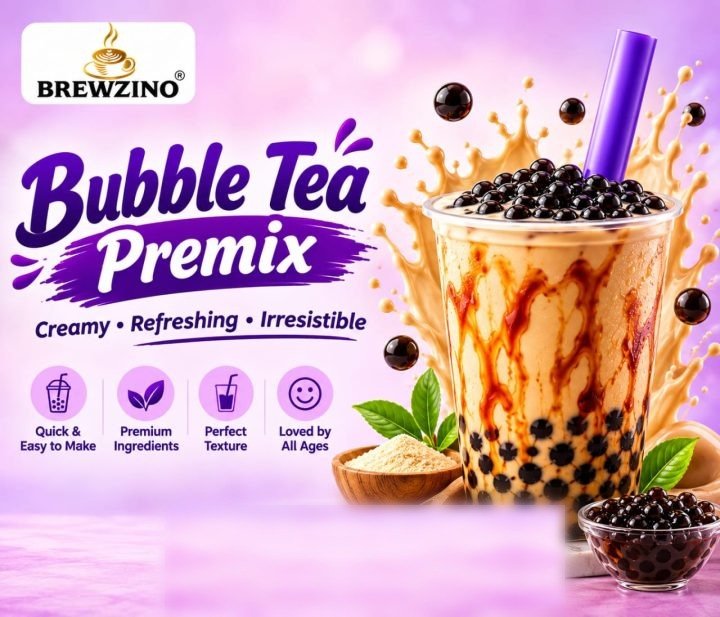
Brewzino's bubble tea premix is built so any cafe can serve it without a dedicated bubble tea counter:
- One-step mixing — powder or granule premix blends with hot or cold water/milk in a shaker, no syrup stations or multi-ingredient recipes to memorise.
- Shelf-stable stock — premix and boba pearls store at room temperature, so you're not managing another cold-chain ingredient.
- Consistent results — the same ratio produces the same cup every time, whether your newest hire or your most experienced barista is behind the counter.
What's in the Range
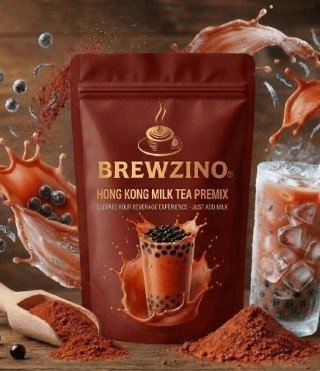
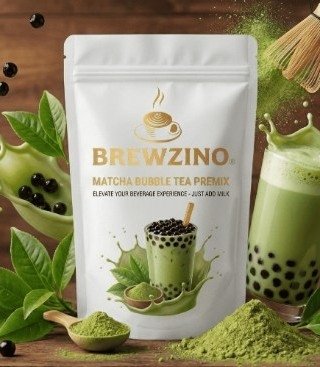
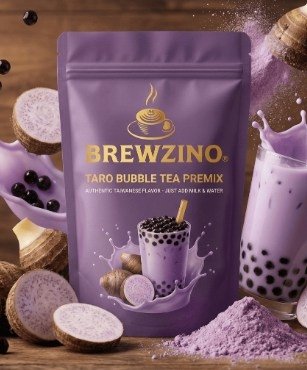
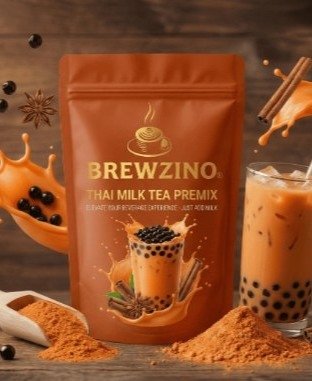
Brewzino manufactures bubble tea premix in flavours including Taro, Matcha, Hongkong-style, Thai Milk Tea, Chocolate, Black Forest, Honeydew, Strawberry, Mango, and more — alongside boba pearls, so a cafe can build a full bubble tea menu from a single supplier instead of juggling multiple vendors.
Getting Started
Most cafes start with 4-6 flavours, request free samples to test taste and dissolve performance, then place a first bulk order once they've confirmed the fit. If you're weighing whether bubble tea belongs on your menu, the easiest next step is trying the product yourself before committing to volume. ## What Equipment Does a Cafe Actually Need to Serve Bubble Tea?
A common misconception is that adding bubble tea requires a dedicated bubble tea counter with specialised equipment — sealing machines, dedicated boba cookers, and a separate prep station. In reality, a shaker or blender, a kettle or hot water dispenser, a fine strainer, and standard cups and wide straws cover the full equipment list for premix-based bubble tea. Boba pearls that require cooking need only a standard pot and stovetop, the same equipment most cafes already use for other menu items. Popping boba pearls need no cooking at all — they're ready to use straight from the pack, refrigerated and spooned or dropped directly into a finished drink. A cafe that already serves cold drinks and has a basic hot water source can realistically add a full bubble tea line without purchasing any specialised equipment at all.
How Much Staff Training Does Bubble Tea Actually Require?
Because premix locks in the flavour, sweetness, and creamer ratio at the manufacturing stage, staff training comes down to two things: following the recipe card's measured ratio (premix to water or milk, and shake or blend time), and correctly preparing any pearls used as a topping (boiling and sweetening tapioca pearls, or simply refrigerating popping boba). Most staff can be trained to prepare a consistent cup within a single shift, since there's no flavour-balancing judgement call to learn — the premix has already made that decision at the manufacturing stage. This is a meaningfully lower training burden than syrup-and-paste-based bubble tea programs, where staff need to learn correct ratios for several separate ingredients rather than one measured scoop.
How Does Bubble Tea Affect Average Order Value for a Cafe?
Bubble tea typically commands a higher price point than a cafe's existing cold beverage lineup — comparable to or above a specialty iced coffee — while carrying a lower per-cup ingredient cost than many espresso-based drinks once the premix's cost efficiency is factored in. Cafes adding bubble tea alongside an existing coffee-focused menu frequently see it become one of their higher-margin items, and it often drives incremental visits from customers who wouldn't otherwise choose a coffee-only cafe, rather than simply cannibalising existing coffee orders. Boba pearls and other add-on toppings, priced as a small supplement to the base drink, further lift average order value with minimal additional preparation time.
What Are the Most Common Mistakes Cafes Make When Adding Bubble Tea?
The most common mistake is over-launching — trying to offer the full 20+ flavour range on day one rather than starting with a focused 4 to 6 flavour lineup and expanding based on actual sales data. This spreads inventory, staff attention, and menu-board space thin before any single flavour has proven itself with local customers. The second common mistake is under-pricing the category relative to its actual ingredient cost and preparation time, often because operators default to pricing it similarly to a basic iced tea rather than recognising it as a distinct, higher-value menu category in its own right. The third is skipping the sample-and-trial stage entirely and placing a full bulk order sight-unseen, which risks a flavour or texture mismatch with local taste preferences that could have been caught with a smaller trial batch first.
How Do You Decide Which Flavours to Launch With?
Most first-time bubble tea cafes do well starting with a mix of one classic (Taro or a classic milk tea), one trending specialty (Matcha or Thai Milk Tea), and one or two fruit-forward options (Mango, Strawberry, or Lychee) to cover the broadest range of customer preferences without overcommitting inventory across the full catalogue. Tracking which of these initial flavours sells fastest over the first few weeks gives a much better guide to what local customers actually want than guessing from national or global sales trends alone, and expansion into additional flavours should follow that real, local sales data rather than simply adding whatever's newest or most talked-about elsewhere.
Can a Cafe Test Bubble Tea Without a Full Menu Commitment?
Yes — a limited-time or "trial" bubble tea offering, using just one or two flavours and boba pearls, is a low-risk way to gauge customer interest before committing shelf space, menu-board real estate, and inventory to a full bubble tea program. Many cafes run this kind of trial for a few weeks, using free samples to source the initial small batch, and only move to a full bulk order and permanent menu listing once the trial period shows consistent demand. This staged approach removes most of the financial risk of adding an entirely new menu category to a cafe that's never served it before.
What Ongoing Support Should a Cafe Expect From Its Premix Supplier?
Beyond the initial recipe cards and costing sheets, ongoing support should include responsive help with reordering and stock planning, consistent product quality that matches the original sample batch on every reorder, and guidance on expanding into new flavours or categories as the cafe's bubble tea program grows. A supplier that treats the relationship as a one-time transaction rather than an ongoing partnership — no support after the first order ships — puts the burden of troubleshooting recipe issues, stock planning, and quality concerns entirely back on the cafe, which defeats much of the "made simple" promise a premix-based approach is meant to deliver in the first place.
How Does Bubble Tea Complement an Existing Coffee-Focused Menu?
Rather than competing with a cafe's existing coffee program, bubble tea typically draws a complementary customer segment — younger customers, groups looking for a shareable or photogenic drink, and customers seeking a caffeine-free or lower-caffeine cold beverage option alongside the cafe's coffee menu. Cafes that position bubble tea as an addition to, rather than a replacement for, their existing identity generally see the strongest results, since it broadens the customer base pulled in by the menu rather than asking existing coffee customers to switch categories entirely.
What's the Real Timeline From Deciding to Add Bubble Tea to Serving Your First Cup?
For a cafe starting from zero bubble tea experience, a realistic timeline runs two to three weeks: about a week to request and receive samples across a shortlist of flavours, a few days to test preparation and finalise which flavours to launch with, and a short window to align pricing against the costing sheet before the first bulk order arrives and the menu goes live. This is considerably faster than building a bubble tea program from scratch with separately sourced syrups, pastes, and boba — where sourcing multiple ingredients from multiple vendors alone can take longer than the entire premix-based launch process end to end. ## How Should a Cafe Price Bubble Tea Relative to the Rest of Its Menu?
Pricing bubble tea correctly starts with the actual making cost per cup — premix quantity, milk or water, sweetener, and any pearls or toppings used — and then applying a margin consistent with the rest of the cafe's beverage menu rather than defaulting to whatever a nearby bubble tea specialist charges. Because premix keeps making cost predictable and low relative to specialty coffee drinks, many cafes find bubble tea can be priced competitively with their existing cold beverage lineup while still carrying a healthy margin, often stronger than their coffee-based drinks once true ingredient cost is accounted for. Toppings like boba pearls or popping boba, priced as a modest add-on rather than bundled into the base price, further improve margin on orders where customers opt in for the extra topping.
What Menu Board Language Works Best for a New Bubble Tea Category?
Cafes introducing bubble tea for the first time often do better with menu language that explains the format briefly rather than assuming customers already know what "boba" or "bubble tea" means — a short descriptor like "milk tea with chewy tapioca pearls" alongside the flavour name helps first-time customers understand what they're ordering without needing to ask staff. Grouping flavours by type (classic, fruit, specialty) rather than listing them alphabetically or randomly also helps new customers navigate an unfamiliar category more easily, nudging them toward a flavour that matches what they're already inclined to order rather than leaving the whole decision to chance.
Does Adding Bubble Tea Require Rebranding or Redesigning a Cafe's Existing Identity?
No — bubble tea can be added as a new menu category within an existing cafe's identity, without needing to rebrand as a "bubble tea shop" or redesign the physical space around it. Most successful cafe additions of bubble tea simply add a new section to an existing menu board and a small callout — a poster, a table tent, or a mention from staff — introducing the new category, rather than treating it as a full concept pivot. This matters specifically because over-investing in rebranding before confirming customer demand is one of the more expensive mistakes a cafe can make when testing a genuinely new menu category.
How Does Inventory Management Differ Between Bubble Tea Premix and Fresh Ingredients?
One of the more underrated benefits of a premix-based bubble tea program is inventory simplicity. Premix and boba pearls are shelf-stable at room temperature (popping boba pearls need refrigeration, but standard tapioca pearls do not until cooked), with an 18-month shelf life, meaning a cafe doesn't need to manage spoilage risk or short reorder cycles the way it would with fresh fruit purees, dairy-based syrups, or fresh-cut fruit toppings. This significantly simplifies weekly ordering and reduces waste risk compared to a bubble tea program built around fresh, perishable ingredients that need frequent restocking and careful rotation to avoid spoilage.
What Should a Cafe Look for When Comparing Bubble Tea Premix Suppliers?
Beyond price, a cafe evaluating premix suppliers should weigh flavour range and whether it covers the specific profile the cafe wants to launch with, certifications (FSSAI at minimum, ideally APEDA for a supplier with genuine manufacturing scale), MOQ flexibility for a first trial order, and whether the supplier provides recipe cards and costing support or simply ships product with no preparation guidance. A supplier offering free samples before any commitment is also a meaningful signal — it shows confidence in the product's actual taste and performance rather than relying purely on a spec sheet or marketing description to close a sale.
How Does a Multi-Outlet Cafe Chain Roll Out Bubble Tea Consistently Across Locations?
For a chain with multiple locations, the biggest risk in adding bubble tea isn't whether any single outlet can execute it well — it's whether every outlet executes it identically. Standardising on one supplier, one set of recipe cards, and one costing structure across every location removes the variation that would otherwise creep in if individual outlet managers sourced or prepared bubble tea slightly differently. Chains that roll out a new menu category like this typically pilot it at one or two locations first, refine the recipe cards and staff training materials based on that pilot, and then roll out to the remaining outlets using the same finalised materials rather than letting each location figure out its own approach independently.
Is Bubble Tea Still Worth Adding to a Cafe Menu in a Crowded Market?
Even in cities where dedicated bubble tea specialists are already well established, a cafe adding bubble tea to an existing, broader menu occupies a different competitive position than a standalone specialist — it's an additional reason for an existing customer to choose that cafe over a competing cafe, not a direct pitch to switch from a dedicated bubble tea shop. Customers who already visit a cafe regularly for coffee or food are often happy to also order a bubble tea from the same place rather than making a separate trip to a specialist shop, particularly if the cafe's version is genuinely well-made rather than a token, poorly-executed addition. Viewed this way, the relevant competitive question isn't whether the market has "too many" bubble tea options already, but whether adding a well-executed version increases what your own existing customers order when they're already in your cafe. ## What Happens During a Typical Sample Evaluation Period?
When a cafe requests samples to evaluate before committing to a bulk order, the evaluation typically involves preparing each flavour exactly per the recipe card, tasting it against the cafe's own quality bar, checking dissolve behaviour and texture with the specific milk or water the cafe plans to use, and — where possible — getting informal feedback from a small group of regular customers before finalising the launch lineup. This process usually takes a few days to a week, giving the cafe confidence in exactly how the finished product will taste and perform before a single kilogram of bulk stock has been ordered.
Can Bubble Tea Be Prepared Consistently Across Different Water and Milk Sources?
Water hardness and milk fat content can subtly affect how any powdered premix dissolves and tastes, which is why testing samples with the actual milk and water source a cafe will use in production — rather than assuming results will be identical to a demo made elsewhere — is a worthwhile step before finalising a recipe card. In practice, most standard tap water and commonly available dairy or non-dairy milk brands produce consistent results with Brewzino's premix, but cafes in regions with notably hard or soft water, or using an unusual milk alternative, are encouraged to confirm this during the sample stage rather than discovering a variance after a full bulk order has already shipped.
How Do Boba Pearls Fit Into a "Made Simple" Bubble Tea Program?
Standard tapioca pearls require boiling and sweetening before use, adding a short prep step compared to the premix itself, but this remains a simple, well-documented process using equipment most cafes already have. Popping boba pearls remove even this step entirely — delivered ready to use, requiring only refrigeration, with no cooking involved at all. A cafe wanting the absolute simplest possible bubble tea program, with no cooked component whatsoever, can build a full menu around popping boba pearls as the only topping, while a cafe comfortable with a short daily pearl-cooking routine can offer both formats side by side for greater topping variety. ## Final Thoughts: Is "Made Simple" Bubble Tea Right for Your Cafe?
The core promise behind a premix-based bubble tea program is that it removes the operational complexity that stops many cafes from adding the category at all — no specialist equipment, no lengthy staff retraining, no juggling multiple fresh, perishable ingredients that need careful sourcing and rotation. What's left is a genuinely simple decision: pick a starting flavour lineup, test it with real samples, price it against your actual making cost, and launch. Ready to see how simple it actually is? Request free samples across a shortlist of flavours and test them in your own cafe before committing to anything further. ## What Do Cafes Typically Say After Their First Month Serving Bubble Tea?
Operators who add bubble tea for the first time frequently report two things once the first month is behind them: that actual day-to-day preparation was simpler than they expected before launching, and that customer response — particularly from younger customers and groups ordering together — arrived faster than expected, often becoming a repeat-order category within the first few weeks rather than taking months to build momentum. This isn't universal, and local taste and demographics still matter, but it's a common enough pattern that it's worth weighing seriously against any initial hesitation about adding an unfamiliar menu category. That combination of low operational risk and comparatively fast payoff is exactly why so many cafes describe the decision to add bubble tea, in hindsight, as one of the easier calls they made on their whole menu that year. ## What's the Simplest Way to Start Right Now?
If you're weighing whether any of this applies to your specific cafe, the fastest way to find out is to stop weighing it in the abstract and request a small sample batch of two or three flavours that seem like the most obvious fit for your existing customers. Try preparing them yourself, exactly per the recipe card, on a quiet afternoon rather than during a rushed peak-hour shift, and judge the result against your own quality bar rather than anyone else's description of how bubble tea is supposed to taste. That one afternoon of hands-on testing answers the "is this actually simple" question far more reliably than any amount of further reading, and it costs nothing beyond the time it takes to prepare a few cups.