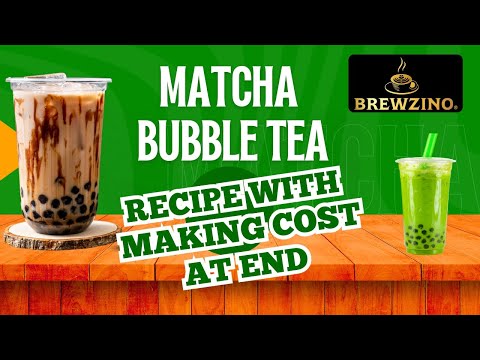
Matcha bubble tea — also called matcha boba tea — is a milk tea made with matcha (finely ground Japanese green tea powder) instead of black tea, served with chewy tapioca pearls at the bottom of the glass. It combines matcha's earthy, slightly bitter, umami-forward flavour with creamy milk, a sweetener, and the distinctive chew of tapioca pearls, usually served over ice. It has become one of the most consistently ordered bubble tea flavours worldwide, prized as much for its vivid green colour and social-media appeal as for its taste, and it's now a standard listing rather than a specialty add-on across most bubble tea menus.
What Is Matcha Bubble Tea?
Matcha bubble tea is a bubble/boba tea variant built on matcha instead of the traditional black or oolong tea base. Where classic milk tea gets its colour and tannic depth from fermented black tea leaves, matcha bubble tea gets its deep green colour, earthy sweetness, and gentle bitterness from stone-ground green tea leaves mixed directly into milk or water. The tapioca pearls, ice, sweetener, and creamer stay the same as any other bubble tea — only the tea base changes, which is why matcha is one of the easiest flavours for a café to add without touching the rest of its bubble tea setup, equipment, or training.
Where Does Matcha Bubble Tea Come From?
Matcha itself originates in Japan, where powdered green tea has been used in tea ceremonies since the 12th century. The finest leaves for matcha are shade-grown for several weeks before harvest — a step that boosts chlorophyll content (for colour) and amino acid content (for the umami-sweet flavour and calming L-theanine) — then steamed to stop oxidation, dried, and stone-ground into an ultra-fine powder. Bubble tea itself originated separately, in Taiwan in the 1980s. Matcha bubble tea is the fusion of the two traditions: Taiwanese boba-tea format meeting Japanese matcha, first popularised across East and Southeast Asia and now a mainstay on Indian café menus over the last several years.
What Is Matcha Bubble Tea Made Of?
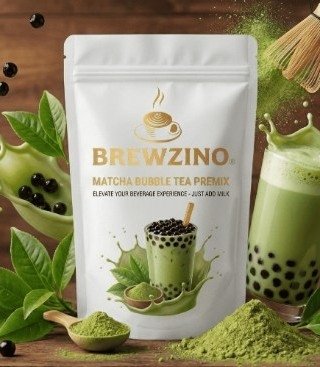
A standard matcha bubble tea has four core components: matcha powder, milk or non-dairy creamer, a sweetener, and cooked tapioca pearls. Making it from scratch means sourcing food-grade matcha separately, whisking it into a smooth paste before adding liquid to avoid clumping, balancing sweetness on top of that, and cooking pearls to the right chew — several separate steps and separate ingredients to source, store, and keep consistent. Brewzino's Matcha Bubble Tea Premix combines the matcha, non-dairy creamer, and natural sweetener into a single powder — mix with water or milk, add cooked tapioca pearls, done. One SKU replaces three to four separate ingredients on the back counter.

Why Use a Premix Instead of Making Matcha Flavour From Scratch?
Matcha is notoriously easy to get wrong from scratch. Too little whisking or mixing leaves visible clumps and a gritty mouthfeel; low-grade matcha turns a dull olive rather than the vibrant green customers expect; and inconsistent powder-to-liquid ratios mean every cup tastes slightly different depending on who's making it. A premix removes all of that variability — every batch dissolves the same way, tastes the same way, and looks the same shade of green, whether it's made by an experienced barista or a first-shift trainee on their first day. For a café or cloud kitchen running multiple outlets or shifts, that consistency matters more than the marginal cost saved sourcing matcha, sweetener, and creamer separately.
How Matcha Bubble Tea Premix Is Manufactured
Brewzino's Matcha Bubble Tea Premix is manufactured in our GMP-compliant, FSSAI-certified facility in Coimbatore, Tamil Nadu. Culinary and ceremonial-grade matcha is sourced from certified farms, then blended in controlled batches with non-dairy creamer and natural sweetener under hygienic, moisture-controlled conditions specifically to preserve the matcha's colour and prevent the oxidation-driven browning that loose matcha is prone to once exposed to air, heat, or humidity. Every batch is checked for moisture content, particle fineness, and colour consistency before packaging, with full batch traceability maintained throughout — the same documentation trail used for export shipments and B2B quality audits.
What Makes a Good Matcha Bubble Tea Premix
Quality matcha premix comes down to four measurable things: colour (a vivid, bright green — dull olive or brownish tones signal old or low-grade matcha, or oxidation during storage), solubility (it should dissolve smoothly into hot or cold liquid with a whisk, shaker, or blender, not clump or leave gritty residue at the bottom of the glass), flavour balance (earthy and slightly bitter matcha notes should still come through under the sweetness, not get masked entirely into a generic "green" flavour), and batch-to-batch consistency. Brewzino's premix is formulated to hit all four, using ceremonial and culinary grade matcha specifically blended for beverage use rather than the finer, more delicate grades meant for traditional whisked tea-ceremony sipping.
Is Matcha Bubble Tea Good For You?
Matcha carries the antioxidant and amino-acid profile of green tea in a more concentrated form than steeped tea, since the whole leaf is consumed as powder rather than steeped in water and then discarded. It's a recognised source of catechins — notably EGCG, one of the most studied plant antioxidants — and L-theanine, an amino acid associated with calm, focused alertness rather than jittery energy. A milk-tea preparation with added sweetener and non-dairy creamer is best thought of as a treat or indulgence beverage rather than a health drink outright, but matcha bubble tea still carries more of matcha's inherent compounds than a heavily diluted matcha latte made with a smaller amount of powder per cup.
Does Matcha Bubble Tea Have Caffeine?
Yes. Because it's made from real matcha green tea — the whole leaf in powdered form, not just a steeped infusion — a typical cup contains roughly 30–70mg of caffeine, noticeably less than a standard cup of coffee (roughly 95mg) but more than a cup of steeped green tea, since none of the leaf itself is discarded after brewing. Matcha also provides L-theanine alongside that caffeine, an amino acid linked to calm, steady energy and focus rather than the sharper spike-and-crash pattern some people associate with coffee. This caffeine/L-theanine combination is one of the reasons matcha is often marketed as a "smoother" energy option on café menus.
How Many Calories Are in Matcha Bubble Tea?
A typical 300–350ml matcha bubble tea made with Brewzino's premix, milk, and a standard portion of tapioca pearls runs approximately 250–350 calories, depending on the sweetness level selected and how generous the pearl portion is. Most of that comes from the milk, added sweetener, and pearls rather than the matcha itself, which is calorie-light on its own — cafés wanting to offer a lighter version can reduce the sweetness level or offer a smaller pearl portion without changing the matcha base or premix ratio at all, making a "lite" menu option easy to add without a separate SKU.
Is Matcha Bubble Tea Sweet? Sugar & Low-Sugar Options
Matcha's natural flavour is earthy and slightly bitter rather than sweet, so the sweetness in a finished matcha bubble tea comes entirely from the sweetener blended into the premix (or added separately) and the brown-sugar syrup typically used to sweeten the tapioca pearls. Brewzino's premix ships with a natural sweetener already balanced against the matcha's bitterness, tuned so the earthy flavour still comes through rather than being overwhelmed. Cafés wanting to offer a "less sweet" option can do so simply by using less syrup on the pearls or diluting the mix slightly with extra milk or water — the matcha premix ratio itself doesn't need reformulating for a lower-sugar menu listing.
Is Matcha Bubble Tea Gluten-Free and Vegan-Friendly?
Matcha itself is naturally gluten-free, and Brewzino's premix uses non-dairy creamer, making a matcha bubble tea made with plant-based milk fully vegan-friendly and dairy-free-compatible. Tapioca pearls, made from cassava root starch, are also naturally gluten-free. The one ingredient worth checking before listing a drink as fully vegan and gluten-free on a menu is the sweetener used to prep the pearls — typically a brown sugar syrup, which is naturally free of both dairy and gluten in standard preparation, but worth confirming against your specific supplier if you're making allergen claims on packaging or a menu board.
How Do You Make Matcha Bubble Tea at Home?
- Cook the pearls: Boil tapioca pearls for 20–25 minutes, rest 15 minutes off heat, then soak in brown sugar syrup so they absorb sweetness and stay glossy.
- Mix the matcha base: Stir 25–30g of premix into 150–200ml of hot water or milk until fully dissolved — a milk frother, shaker bottle, or small whisk gives the smoothest, lump-free result.
- Assemble: Add the sweetened pearls to a glass first, then fill with ice for an iced version, or skip the ice for a hot serve.
- Pour and serve: Pour the matcha mixture over the ice and pearls, add a wide bubble-tea straw so the pearls can be sipped through, and serve immediately for the best texture.
What Are the Different Ways to Serve Matcha Bubble Tea?
Beyond the classic hot or iced milk tea format, matcha premix works well blended with ice and milk into a matcha smoothie, layered over fresh milk for a matcha latte with pearls added on top, or used as a flavour base for matcha cakes, ice cream, and panna cotta in a dessert kitchen. The same premix that goes into a drink doubles as a pastry-kitchen ingredient, which is useful for cafés and dessert shops that want to extend one SKU across both the drinks menu and the dessert case rather than stocking a separate matcha powder for baking.
Matcha Bubble Tea vs Matcha Latte: What's the Difference?
A matcha latte is simply whisked matcha and steamed or frothed milk, with no tapioca pearls and typically a lighter hand with sweetener — closer to a specialty-coffee-shop drink in format and presentation than a bubble tea shop item. Matcha bubble tea adds the chewy tapioca pearls, is usually served colder and noticeably sweeter, and leans into the bubble-tea-shop presentation: a tall cup, a wide straw, and visibly layered pearls at the bottom. Both drinks share the same matcha flavour base, so a café stocking Brewzino's premix can realistically offer either drink — or both — from the same single ingredient.
How Does Matcha Bubble Tea Compare to Black Forest Bubble Tea?
Matcha and Black Forest sit at opposite ends of the bubble tea flavour spectrum. Black Forest is an indulgent dark chocolate and cherry flavour aimed squarely at dessert-drink customers, sweet and rich from the first sip. Matcha is earthy, slightly bitter, and noticeably less sweet, appealing more to customers who want something that reads as fresher or "better for you" alongside the classic dessert-style flavours on the same menu. Most cafés carry both rather than choosing one over the other, since the two flavours genuinely draw different customer preferences instead of competing for the same order.
Who Uses Matcha Bubble Tea Premix?
Bubble tea cafés, dessert shops, cloud kitchens, frozen yoghurt bars, and HORECA chains across India and Brewzino's 30+ export destinations use matcha bubble tea premix — it's consistently one of the top three ordered flavours alongside classic milk tea and taro, and it's popular enough that new bubble tea outlets rarely launch without it already on the opening menu. It's also a common choice for specialty cafés and dessert brands that want a distinctive, photogenic drink for social media without building a whole new prep process around it.
How Does Matcha Bubble Tea Compare to Other Popular Drinks?
Against a regular black milk tea, matcha bubble tea is less tannic and reads as more "premium" on a menu board. Against a coffee-based cold brew, it has noticeably less caffeine and a smoother, calmer energy profile from the L-theanine working alongside that caffeine. Against a fruit tea, it's creamier, richer, and more filling as a between-meal drink. That combination — a distinct, recognisable flavour, a moderate caffeine profile, and dessert-adjacent appeal without being purely sugar-driven — is part of why matcha bubble tea holds a stable, recurring spot on menus rather than fading as a seasonal trend the way some flavour launches do.
What Mistakes Should You Avoid When Making Matcha Bubble Tea at Home?
The most common mistake is under-mixing, which leaves visible matcha clumps and a gritty texture at the bottom of the cup — a shaker bottle or milk frother solves this reliably, far more so than stirring with a spoon. The second is using water or milk that's too hot, which can make matcha taste flat, bitter, or even slightly burnt rather than earthy-smooth; warm rather than boiling liquid works better for both flavour and colour. The third is skipping the sweetener balance entirely and assuming the matcha alone will taste right, which leaves the drink tasting more like straight steeped green tea than a bubble tea. Brewzino's premix is formulated to sidestep all three issues, since the sweetener and creamer are already blended in at a tested ratio.
How Should You Store Matcha Bubble Tea Premix?
Store the sealed pack in a cool, dry place away from direct sunlight and heat sources — matcha is sensitive to light, heat, and moisture, all of which accelerate colour fading (a shift from vivid green toward dull olive or brown) and gradual flavour loss. Once opened, reseal the pack tightly between uses rather than leaving it exposed to air, and use it within a reasonable window for the best colour and flavour in the finished drink. Properly stored under these conditions, Brewzino's premix carries an 18-month shelf life from the manufacturing date, well suited to both fast-moving café use and slower-turnover retail stock.
How Is Matcha Bubble Tea Premix Packaged Sustainably?
Brewzino ships Matcha Bubble Tea Premix in moisture-proof, food-grade packaging sized to the buyer's actual need: 500g stand-up retail pouches for direct-to-consumer sale, 1kg resealable bags for smaller café orders, and 5kg/10kg/25kg heavy-duty bulk bags for HORECA and manufacturing use — all suitable for container export. Right-sizing the pack format to the buyer (a small retail pouch versus an industrial bulk sack) rather than shipping one-size-fits-all packaging reduces material waste across the full range of order volumes Brewzino ships, from single-café retail orders up to full export containers for overseas distributors.
Is Matcha Bubble Tea Trending in India?
Yes — matcha has moved well beyond being a niche specialty-café ingredient in India, driven by growing consumer awareness of green tea's antioxidant profile and matcha's strong visual appeal on social media, where its vivid green colour photographs distinctively against typical menu boards and drink presentations. It's now a standard listing on bubble tea and specialty beverage menus across major Indian cities, not limited to imported-café-style outlets, and demand has grown steadily alongside the broader bubble tea category's expansion into tier-2 and tier-3 cities over the past few years.
How Do Cafés Price Matcha Bubble Tea?
Matcha bubble tea typically commands a modest premium over classic milk tea on Indian café menus, reflecting its positioning as a specialty ingredient — cafés generally price it in line with other premium flavours like taro or Thai milk tea rather than at the base tier reserved for standard black milk tea. Using a consistent, pre-blended premix keeps the making cost predictable regardless of who's behind the counter on a given shift, which makes menu pricing easier to hold steady across multiple locations without the price varying based on how much matcha or sweetener a particular staff member happened to use.
Where Can You Buy Matcha Bubble Tea Premix in Bulk in India?
If you're a café owner, HORECA business, dessert shop, or retail brand, Brewzino manufactures and exports Matcha Bubble Tea Premix directly from our FSSAI-certified facility in Coimbatore, Tamil Nadu. MOQ starts at 1kg for a trial or bulk order, with private label available for B2B buyers and samples shipped worldwide via the Order Sample option, so you can confirm colour, flavour, and solubility before committing to a larger order.
Can You Get Matcha Bubble Tea Premix Under Your Own Brand?
Yes. Brewzino offers full private label and custom formulation for Matcha Bubble Tea Premix — your own branding and packaging, with Brewzino handling manufacturing, sourcing, and quality control, and flavour intensity or sweetness adjustable to match your brand's own recipe standard. This is available from relatively modest order volumes, not reserved only for large-scale manufacturing contracts, which makes it practical for a single-location café building its own retail product line as well as for larger multi-outlet chains standardising a house blend across every location.
What Should You Check Before Ordering Matcha Bubble Tea Premix?
Before committing to a bulk order, check the matcha grade used (culinary vs ceremonial), the certifications held by the manufacturer (FSSAI, APEDA, and IEC for export shipments), the packaging formats available for your specific order size, the shelf life and recommended storage conditions, and whether private label is offered if you plan to eventually sell under your own brand rather than a generic label. Requesting a sample before placing a bulk order — rather than ordering blind off a spec sheet — remains the most reliable way to confirm the flavour, colour, and solubility actually meet your standard before it's on your menu.
Final Thoughts: Should You Add Matcha Bubble Tea to Your Menu?
Matcha bubble tea combines a distinctive, on-trend flavour with a moderate, steady caffeine profile and strong visual appeal — a combination that's kept it as a stable top seller rather than a passing trend across bubble tea menus in India and abroad. Brewzino's premix dissolves instantly, needs no separate creamer or sweetener sourced on the side, and delivers the same vivid colour and balanced flavour batch after batch regardless of who's making it. Ready to stock matcha bubble tea? View the Matcha Bubble Tea Premix product page to request a sample or a bulk quote.
Key Takeaways
- Matcha bubble tea = matcha powder + milk/creamer + sweetener + tapioca pearls.
- ~30–70mg caffeine per cup, ~250–350 calories for a typical 300ml serving.
- Brewzino's premix dissolves instantly — no separate creamer or sweetener needed.
- MOQ 1kg, private label available, samples shipped worldwide.