
Setting up a bubble tea shop and growing it into a multi-outlet business are two very different challenges. Brewzino is built to support both stages, using the same manufacturing standard from the first cup to the hundredth outlet.
Step 1: Choosing the Right Premix Range
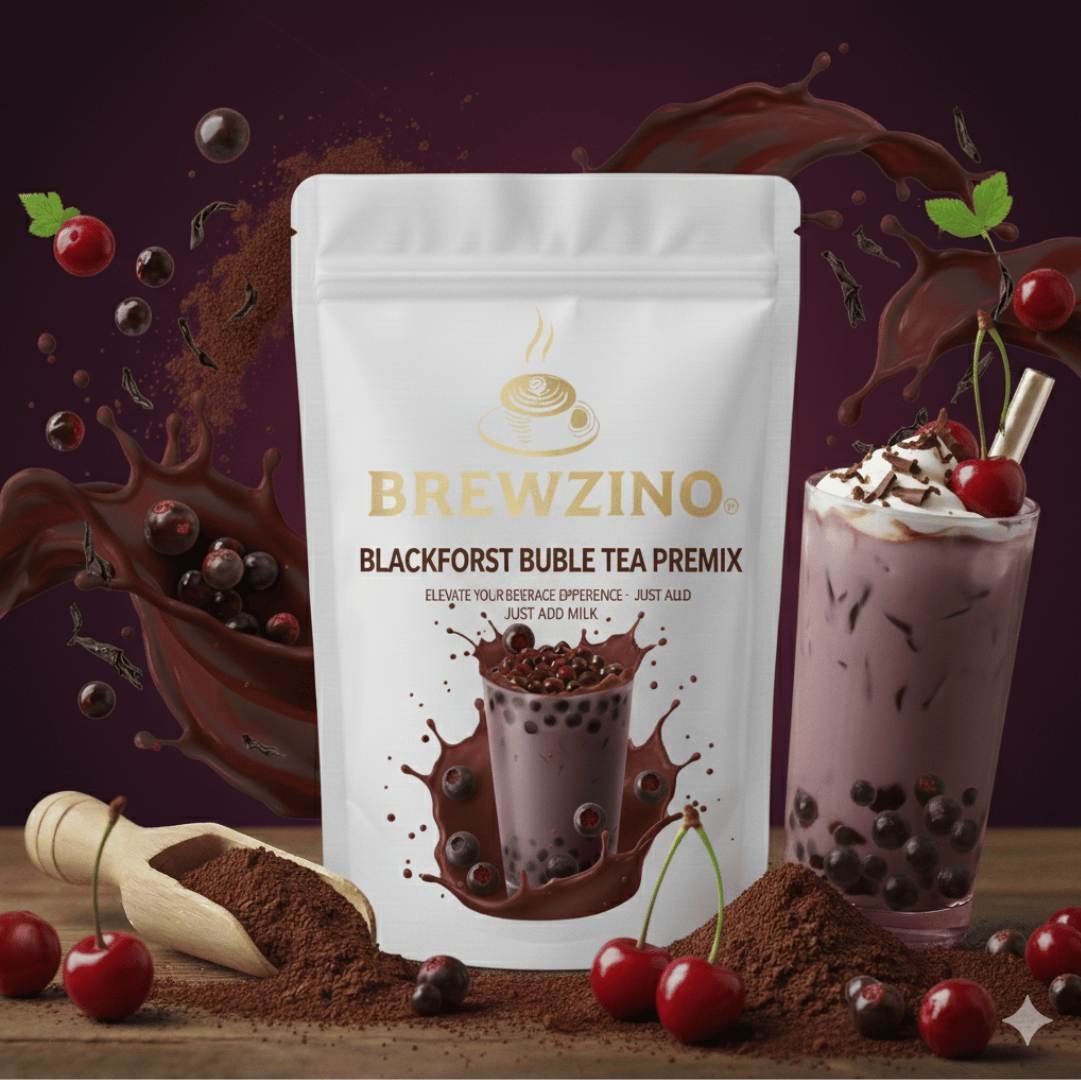
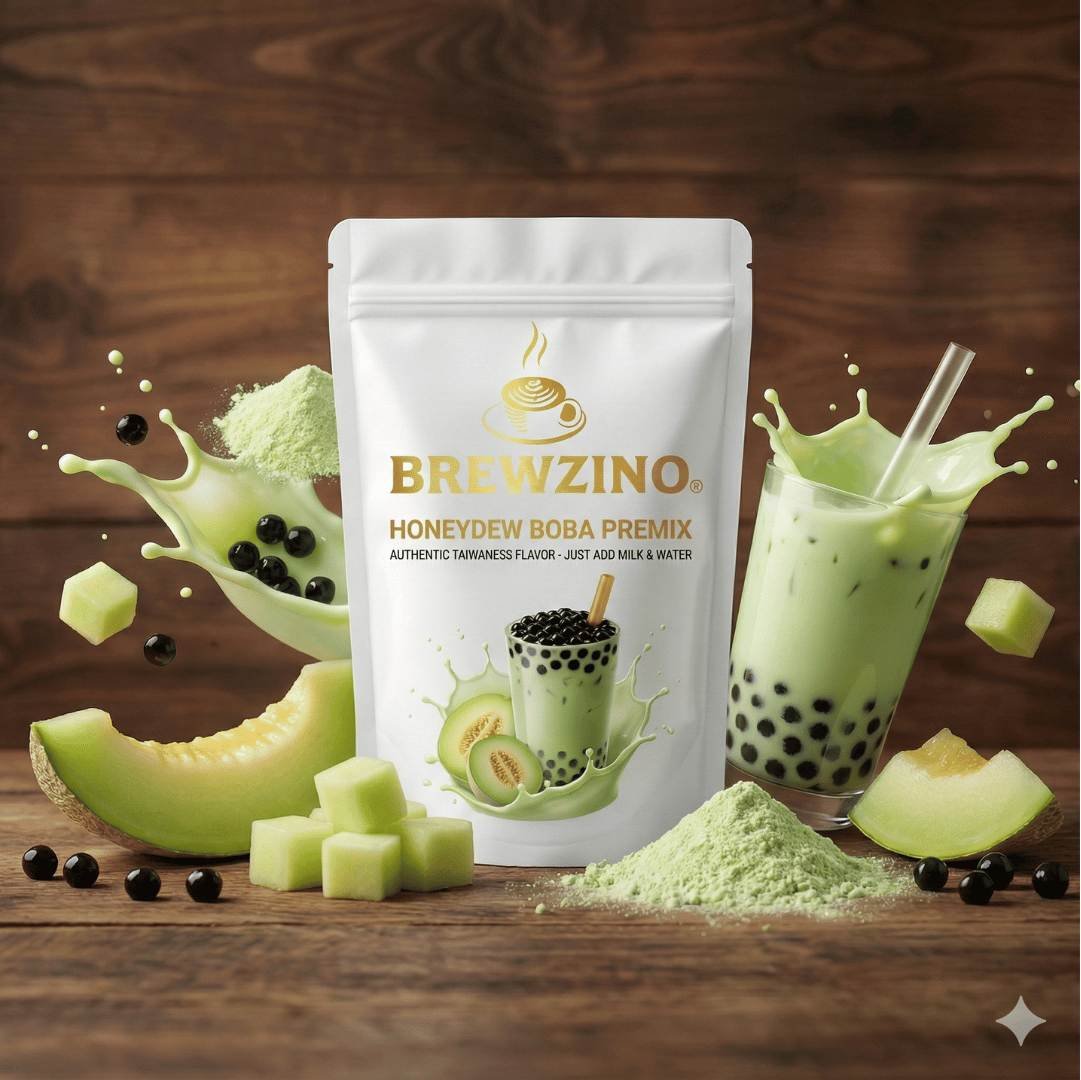
Every launch starts with samples. New operators typically test 4-6 flavours — usually Taro, Hongkong-style, Thai Milk Tea, and Matcha — to find what fits their local customer base before placing a first bulk order.
Step 2: Getting the Recipe Right
Each flavour ships with a recipe card and mixing ratio, so staff can produce a consistent cup without prior bubble tea experience. This is where free guidance from Brewzino's team — costing sheets, prep tips, and direct support — matters most for a first-time launch.
Step 3: Consistent Supply at Scale
Once a shop is running, the priority shifts from "getting it right" to "keeping it right." Brewzino's GMP-compliant, batch-tested manufacturing means every reorder matches the sample that was originally approved — no drift in taste, colour, or texture between deliveries.
Step 4: Growing Beyond One Outlet
When a shop is ready to expand into a second location or a franchise model, the same premix and recipe cards travel with it. Because the product itself doesn't change, new outlets can open without re-testing suppliers or retraining staff from scratch — the consistency that made the first shop work is what makes the second and third easier.
Whether you're setting up your first counter or standardising your fifth outlet, the goal is the same: a supply partner that doesn't become a variable you have to manage. ## What Does "Getting It Right" Actually Involve at Launch Stage?
Getting a first bubble tea shop right at launch means more than just having good-tasting premix — it means having a documented recipe that any staff member can follow, a costing structure that makes the menu genuinely profitable rather than just plausible-looking, and a starting flavour lineup small enough to execute consistently rather than spread thin across too many options on day one. New operators who skip this groundwork often discover pricing or consistency problems only after they've already opened, which is a much harder position to correct from than getting it right before the first customer ever orders a cup.
Why Does Batch-Tested Manufacturing Matter More as a Shop Scales?
A single shop with one point of sale can sometimes get away with minor quality inconsistency, since the same one or two staff members are usually behind the counter and any drift tends to be gradual and self-correcting. That tolerance disappears the moment a second location opens, staffed by a different team learning the product for the first time. Batch-tested manufacturing — where every delivery matches the same tested standard regardless of which month or which production run it came from — becomes the mechanism that keeps a second, third, or tenth outlet consistent with the first, without requiring each new location to independently rediscover what "the right cup" tastes like through trial and error.
What Happens When a Shop Is Ready to Open a Second Location?
The transition from one shop to two is often the first real test of whether a bubble tea business's supply chain can actually scale. If the original shop's supplier can't reliably support a second location with the same product, at the volume a growing business needs, the second launch inherits all the same groundwork problems the first launch had — new recipe testing, new costing, new staff training — rather than simply replicating what already worked. Because Brewzino's premix and recipe cards travel identically to any new location, a second outlet can launch using the exact same tested recipe and costing structure as the first, with the only real new variable being staff training on execution, not reinventing the product itself.
How Does Franchise Standardisation Actually Get Enforced Across Outlets?
Standardisation isn't automatic just because every outlet orders from the same supplier — it requires the franchise itself to distribute the same recipe cards, costing sheets, and training materials to every new outlet as it opens, rather than allowing individual outlet managers to interpret preparation instructions independently. Brewzino supports this by keeping recipe cards consistent across every order regardless of which outlet or region is placing it, so a franchise's own internal standardisation efforts are working with a stable, unchanging product specification rather than a moving target that varies by batch or by region.
What's the Realistic Growth Path From One Shop to a Small Chain?
Most successful expansions from a single shop to a small regional chain follow a similar pattern: prove the model and recipe consistency at one location first, typically over six months to a year, then open a second location using the exact same recipe, costing, and supplier relationship rather than treating it as a fresh start. Only once two or three locations are running smoothly does it typically make sense to consider franchising to outside operators, since franchising before your own recipe and operational standards are fully proven tends to export any unresolved inconsistency to franchisees who then have to work through the same problems independently, at a further remove from the original team that could otherwise help troubleshoot directly.
Does Brewzino Offer Different Support at Different Growth Stages?
The core supply relationship — batch-tested premix, recipe cards, and direct support — remains consistent whether a business is a single shop or a ten-outlet chain, but the practical focus of that support shifts. A single new shop typically needs more hands-on guidance on recipe testing, costing, and initial menu design. A growing chain needs more support around consistent multi-location ordering, ensuring every outlet has access to the same recipe materials, and occasionally reviewing costing as order volumes and margins evolve at scale. The relationship adapts to what a business actually needs at its current stage rather than offering a single, one-size-fits-all support package regardless of size.
What Should a Growing Chain Watch for as It Adds Outlets Quickly?
The biggest risk in rapid multi-outlet expansion is quality or consistency drift creeping in faster than it can be caught and corrected — a new outlet manager slightly misinterpreting a recipe card, or a busy launch period leading to shortcuts in staff training that wouldn't have happened at a calmer, single-shop pace. Chains that build in a short verification step for each new outlet — confirming the first batch of drinks served matches the approved recipe before considering the launch fully complete — tend to catch this kind of drift early, while it's still a simple correction, rather than after it's become a pattern across several locations that's much harder to unwind. ## How Does Sample Testing Change as a Business Moves From Launch to Expansion?
At initial launch, sample testing is about finding the right flavour lineup and confirming taste and preparation fit for a brand-new menu. Once a business is expanding to new locations with an already-proven menu, sample testing shifts purpose — it becomes a quality-assurance check to confirm each new bulk order still matches the original approved standard, rather than an open-ended flavour exploration. Some growing chains build this into their own opening checklist for new outlets: a quick side-by-side taste comparison against the original recipe before a new location's grand opening, just to catch any unexpected variation before customers do.
What Financial Planning Changes Once a Shop Considers a Second Location?
Beyond the product and recipe side, opening a second location introduces new financial planning questions a single-shop operator hasn't had to answer yet — how much additional working capital is needed for a second location's initial stock, whether centralised purchasing across both locations improves per-unit pricing, and how reorder timing needs to adjust once two locations are drawing from the same supply relationship rather than one. Because premix has an 18-month shelf life and doesn't carry the spoilage risk of fresh ingredients, centralising purchasing across multiple locations is a genuinely low-risk way to capture better bulk pricing, compared to categories where each location would need to manage its own short-shelf-life inventory independently.
Why Do Some Bubble Tea Businesses Struggle to Scale Even With Strong Demand?
Strong customer demand at a single location doesn't automatically translate into successful expansion — many bubble tea businesses that struggle to scale do so not because customers don't want more locations, but because their operational foundation (recipe documentation, costing discipline, and supplier reliability) wasn't solid enough to replicate cleanly. A single, talented founder who "just knows" how to make the drinks right, with nothing written down, is a real bottleneck the moment a second location needs staff who weren't personally trained by that founder. Building the documentation and supplier consistency in from the start — even if a business only has one location today — removes this bottleneck well before it becomes the thing actually limiting growth.
What's the Long-Term Value of Choosing One Consistent Supplier From Day One?
Businesses that choose their manufacturing partner carefully at the very first shop, rather than switching suppliers once they start scaling, generally have a smoother expansion path than those that later discover their original supplier can't support higher volumes, consistent multi-location quality, or the documentation a growing chain needs. Switching suppliers mid-growth means re-testing recipes, re-training staff, and risking a period of inconsistency while the new supplier relationship beds in — exactly the kind of disruption a chain wants to avoid while it's simultaneously trying to open new locations. Choosing a manufacturer built to support the whole journey, from first cup to a multi-outlet network, removes that later disruption risk entirely.
Ready to Take the Next Step, Whatever Stage You're At?
Whether you're testing your very first sample kit before opening a single counter, or planning your fifth outlet's launch inventory, the starting point is the same: reach out, request samples relevant to where you are right now, and let the recipe cards, costing sheets, and direct support scale with you as your business grows. ## How Does Brewzino's Facility Support Growing Order Volumes Without Delay?
A common concern for a growing chain is whether a manufacturer that supported a single shop's modest first order can keep pace once volume grows tenfold across several outlets. Brewzino's Coimbatore facility is built with production capacity well beyond single-shop order sizes specifically because most of its B2B relationships follow this exact growth trajectory — a small first order that scales meaningfully as the buyer's own business expands. Rather than treating growing order volume as a strain the relationship wasn't built for, production planning already accounts for existing buyers scaling up, so a chain moving from one outlet to five doesn't need to renegotiate capacity or worry about being deprioritised behind newer, larger accounts.
What Does Quality Consistency Look Like Three Years Into a Growing Chain's Journey?
The real test of batch-tested manufacturing isn't the first order — it's whether the fiftieth order, placed years later by a chain that's now five times the size it was at launch, tastes identical to the first sample that convinced the founder to launch in the first place. This is where documented recipe cards and consistent manufacturing standards compound in value over time: a chain that's grown steadily on a stable supply relationship can trust that a new outlet opening in year three will serve the same cup as the original outlet did in year one, without needing to re-verify quality from scratch at every stage of growth.
How Should a Growing Chain Structure Its Own Internal Quality Checks?
Beyond relying on the manufacturer's own batch testing, chains that scale successfully often build a lightweight internal quality check into their own operations — a simple monthly taste comparison at each outlet against a reference sample, or a quick review of customer feedback specifically flagging consistency issues rather than general satisfaction. This isn't about distrusting the supplier's own quality control; it's an additional layer that catches outlet-level execution issues (staff not following the recipe card correctly, for instance) that wouldn't show up in the manufacturer's own batch testing, since that testing only confirms the product itself, not how consistently each individual outlet is preparing it.
What's Different About Supporting a Franchise Model Versus Company-Owned Outlets?
Company-owned multi-outlet chains and true franchise models — where individual franchisees own and operate their own locations under license — face a similar core challenge (consistency across locations) but different practical dynamics. A franchisor typically has less direct day-to-day control over how carefully an individual franchisee follows recipe cards and training compared to a company-owned outlet with directly managed staff, which makes the underlying product consistency (a batch-tested premix that performs the same regardless of who's using it) even more important as a safety net. Brewzino's role stays the same in both models — supplying a consistent, tested product with accompanying recipe documentation — but franchisors specifically benefit from having that product-level consistency to fall back on precisely because they can't always guarantee execution-level consistency across independently operated franchise locations the way a company-owned chain can.
What Advice Would Experienced Multi-Outlet Operators Give to a First-Time Shop Owner?
Operators who've successfully grown from one shop to several consistently point to the same lesson: invest in documentation and supplier consistency early, even when it feels unnecessary for a single location that the founder is still personally running day to day. The habits and systems that don't seem to matter yet at one shop — written recipes, disciplined costing, a supplier chosen for long-term reliability rather than the lowest initial quote — become the exact things that make or break a smooth second and third location. Building them in from day one, rather than retrofitting them once expansion is already underway, is the single most common piece of advice experienced operators give to first-time shop owners just getting started. ## How Does Packaging and Shelf Life Support Multi-Location Logistics?
As a business grows from one shop to several, logistics complexity grows with it — coordinating deliveries to multiple addresses, managing stock levels across locations that may sell at different rates, and avoiding the situation where one outlet is overstocked while another runs low. Premix's 18-month shelf life gives a growing chain real flexibility here: stock can be centrally warehoused and redistributed across outlets as needed, or ordered in bulk and split across locations, without the tight timing constraints that would apply to a perishable ingredient. This logistics flexibility becomes increasingly valuable as a chain adds outlets, since it removes shelf life from the list of constraints a growing operations team needs to actively manage.
What Happens if a New Outlet's Launch Doesn't Go as Smoothly as the First?
Even with identical recipes and the same supplier, a new outlet's launch can occasionally hit friction the original shop didn't — a new team still building familiarity with the product, a different local customer base with different flavour preferences, or simply the normal teething problems of any new opening. When this happens, the value of an ongoing supplier relationship becomes clearest: rather than troubleshooting alone, a chain can lean on the same direct support that helped with the first shop's launch to work through what's different about the new location, whether that's a recipe adjustment, additional staff training, or a different initial flavour lineup better suited to the new outlet's local customer base.
Final Thoughts: Building a Bubble Tea Business That Scales
The difference between a bubble tea shop that stays a single location indefinitely and one that grows into a small chain or franchise often isn't the quality of the idea or the initial customer response — it's whether the operational foundation (documented recipes, disciplined costing, and a manufacturing partner built for growth) was solid enough to replicate cleanly at a second, third, and tenth location. Brewzino is built to support that foundation at every stage, from a first sample kit to a growing multi-outlet network, using the same manufacturing standard throughout. Ready to build on solid ground from day one? Reach out to start with samples relevant to wherever your business is right now. ## What Questions Should You Ask Before Choosing a Supply Partner for the Long Haul?
Before committing to a manufacturing partner you intend to grow with over several years, it's worth asking directly: can they support your order volume not just today but at five or ten times today's scale? Do they provide documentation (recipe cards, costing sheets) that travels cleanly to a new location, or only informal guidance tied to one relationship? Is their quality process consistent enough that a batch ordered years from now will still match today's sample? A supplier that answers these confidently, with real examples from other growing partners, is a fundamentally different long-term bet than one focused only on winning your first order. It's a question worth asking before the first order, not after the fifth outlet has already opened and a gap in the relationship becomes harder to fix retroactively. ## How Do You Know When Your Business Is Actually Ready to Expand?
Readiness to open a second location is less about a specific revenue number and more about whether the first shop's operations are genuinely stable enough to replicate — a documented recipe staff can follow without the founder present, a costing structure that holds up under real, sustained volume rather than an early estimate, and a supplier relationship that's already proven reliable over several reorder cycles. A shop that's still discovering pricing or consistency problems in its own single location isn't yet ready to multiply those same unresolved problems across a second site; resolving them first, even if it delays expansion by a few months, tends to produce a smoother and less costly second launch than expanding before the first location's foundation is fully settled.