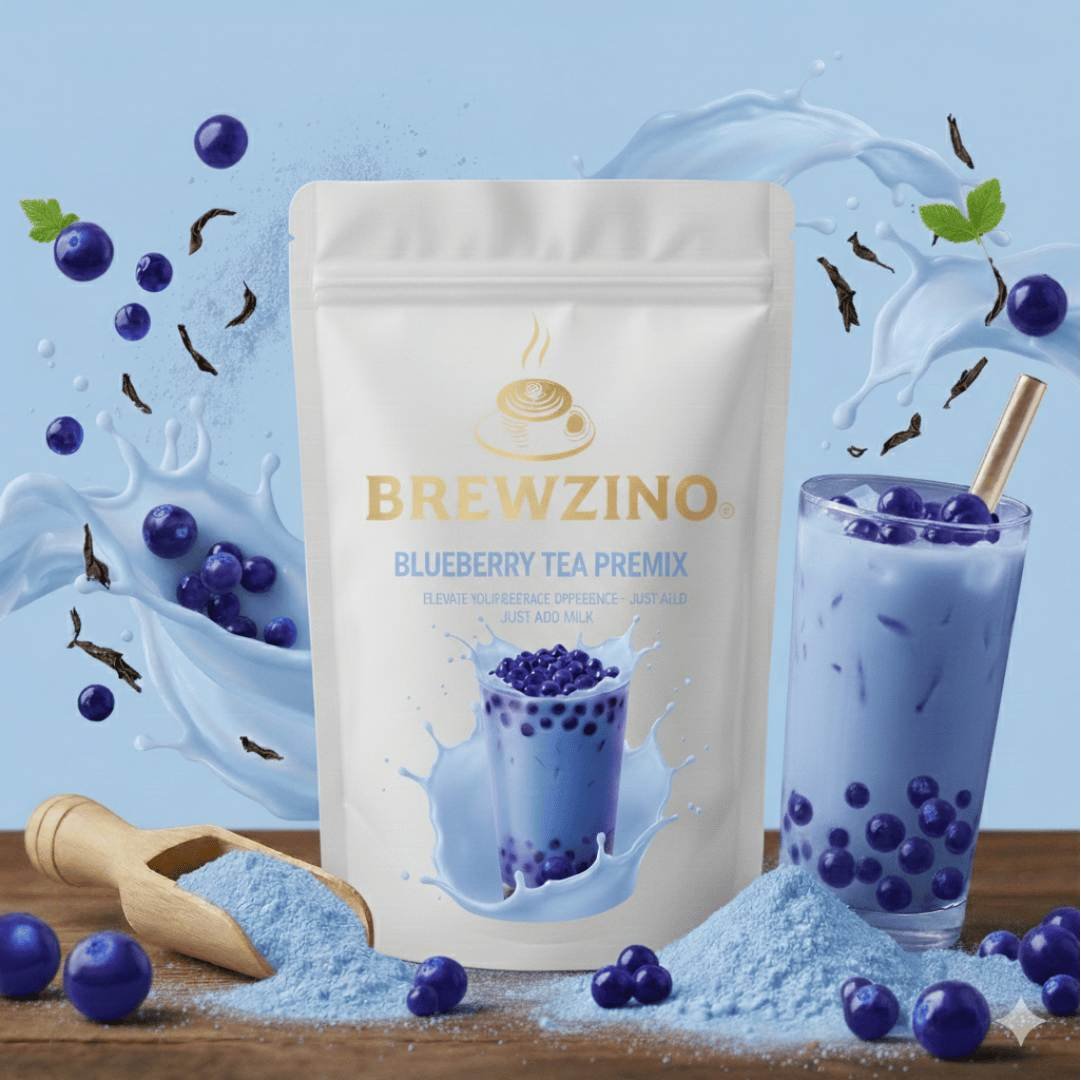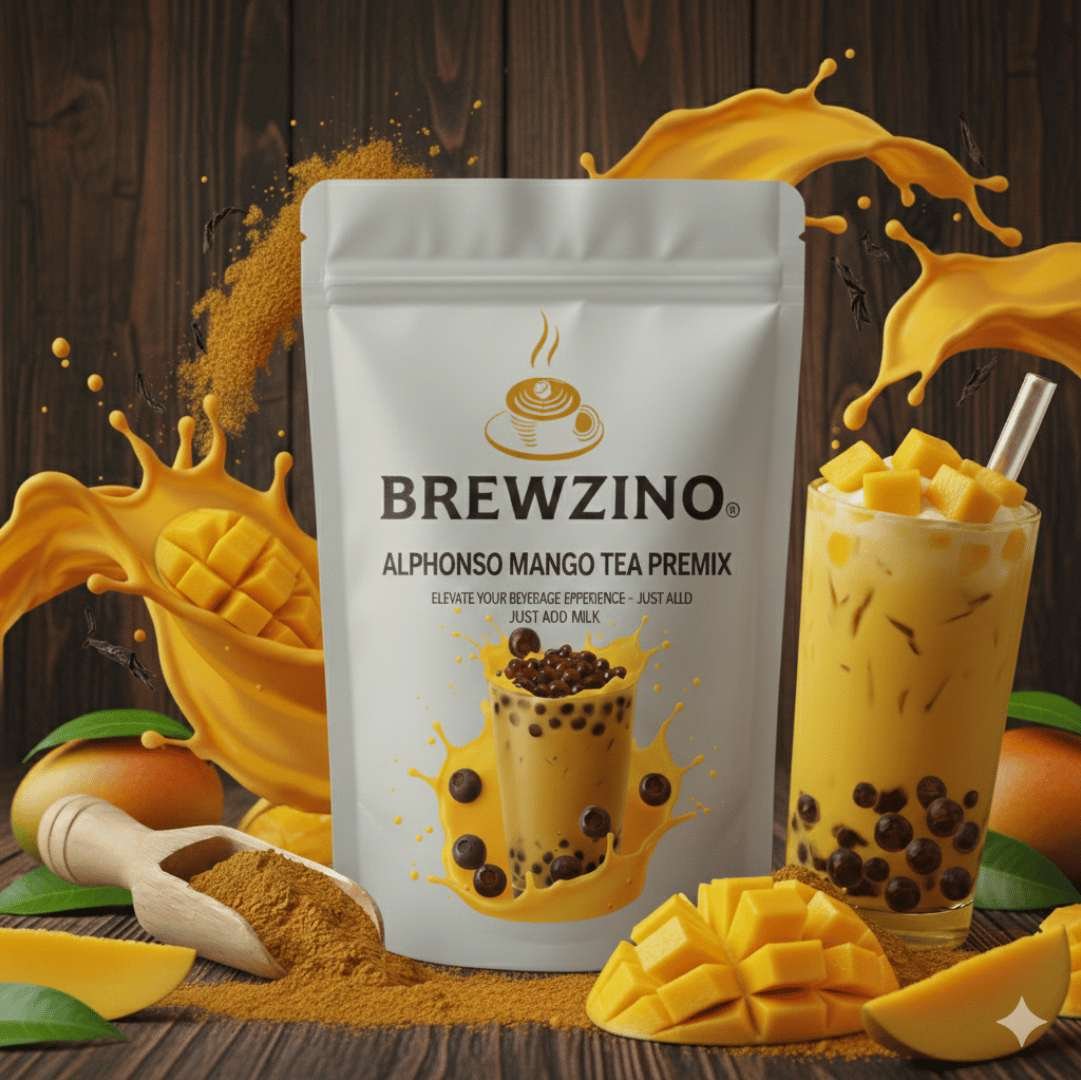
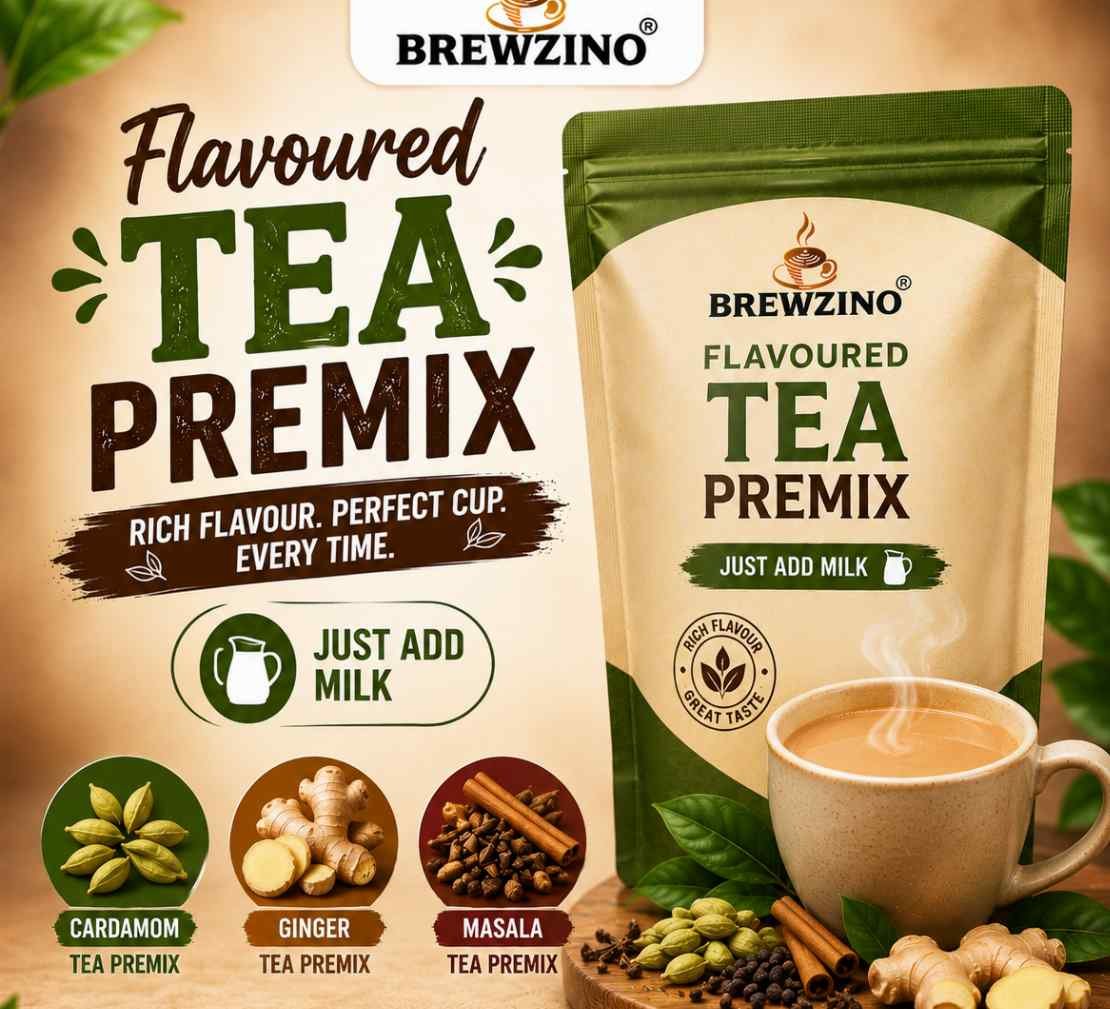
Adding bubble tea to a tea shop or franchise menu sounds simple until you try sourcing it yourself — boba pearls from one vendor, flavour syrups from another, and no guarantee any of it tastes the same next month. That's the problem a single manufacturing partner solves.
The Problem With Sourcing on Your Own
Piecing together bubble tea ingredients from multiple small suppliers usually means inconsistent quality batch to batch, no real food safety accountability, and a menu that tastes different depending on which vendor had stock that week. For a single shop that's frustrating; for a franchise with multiple outlets, it's a brand risk.
What a Manufacturing Partner Solves
Working with one GMP-compliant manufacturer instead of several small vendors means every ingredient — bubble tea premix, boba pearls, tea premix — is produced, tested, and packed to the same specification. Brewzino tests every batch in-house for taste, colour, moisture content, microbial counts, and dissolve performance before it ships, and holds FSSAI, APEDA, and IEC credentials that a patchwork of local vendors typically can't offer.
Franchise-Ready Consistency
For franchises specifically, this matters more than almost anything else on the beverage menu: a customer at outlet three should get the exact same cup as a customer at outlet one. That's only possible when every outlet is sourcing from the same batch-tested supply, not improvising with local ingredients.
Why Brewzino
Beyond the certifications, Brewzino supports partners with free samples to test before committing, recipe cards and costing guidance to launch correctly, and private label options for tea shops that want the product under their own brand. For a tea shop or franchise weighing whether to add bubble tea, the real decision isn't the flavour lineup — it's who's manufacturing it. ## What Does "Piecing Together" Bubble Tea Ingredients Actually Look Like in Practice?
A tea shop sourcing bubble tea ingredients independently typically ends up with boba pearls from one local vendor, flavour syrups or pastes from another, and non-dairy creamer or sweetener from a third — each with its own quality standard, its own delivery schedule, and often no food safety certification at all beyond basic local trading norms. When one of these small vendors runs out of stock, has a bad batch, or simply stops supplying reliably, the tea shop is left scrambling to find a substitute mid-week, often accepting a lower-quality or differently-flavoured replacement just to keep the menu running, which is exactly the kind of inconsistency customers notice even if they can't articulate why a familiar drink suddenly tastes slightly different.
How Does Inconsistent Sourcing Specifically Damage a Tea Shop's Reputation?
Customers build loyalty around a specific, expected experience — the same cup, tasting the same way, every time they order it. When that expectation breaks because an ingredient was swapped, a supplier ran short, or quality varied between batches, the damage isn't limited to that one bad cup; it erodes the underlying trust that made the customer a repeat visitor in the first place. For a single shop, this kind of damage is bad but recoverable. For a shop trying to build a reputation across multiple locations or as a recognisable local brand, inconsistent sourcing turns every location into an independent variable, undermining the very consistency that makes a brand recognisable and trustworthy in the first place.
What Specifically Changes When You Move to a Single GMP-Compliant Manufacturer?
Working with one certified manufacturer for boba pearls, bubble tea premix, and tea premix together means every ingredient is produced under the same documented process, tested against the same quality benchmarks, and packed to the same food safety standard — rather than each ingredient carrying whatever quality standard its individual small vendor happened to apply, if any. Brewzino specifically tests every batch in-house for taste, colour, moisture content, microbial counts, and dissolve performance before it ships, giving a tea shop a verifiable quality standard behind every delivery rather than simply trusting a vendor's word that "it's the same as last time."
Why Does This Matter More for a Franchise Than a Single Independent Shop?
A single independent tea shop can at least directly control its own sourcing decisions and catch inconsistency issues quickly, since the same owner or manager is overseeing every order. A franchise loses that direct control the moment a second outlet opens under separate day-to-day management — if each outlet is left to source its own boba pearls and premix locally, the franchise has no real mechanism to guarantee a customer at outlet three gets the same cup as a customer at outlet one, undermining the whole point of operating as a recognisable franchise brand rather than a collection of independently run shops sharing a name. Standardising every outlet's sourcing on one certified manufacturer removes this risk structurally, rather than relying on each outlet manager's individual diligence to maintain consistency.
What Certifications Should a Tea Shop Actually Look for in a Manufacturing Partner?
At minimum, a manufacturing partner should hold FSSAI certification, confirming basic food safety compliance for domestic sale. APEDA registration and IEC, while primarily export-oriented credentials, are also useful signals of a more rigorous, audited manufacturing process even for a tea shop with no export ambitions of its own — a manufacturer maintaining export-grade documentation and traceability is generally holding itself to a higher operational standard than one that only meets the minimum bar for local sale. Brewzino holds all three, along with in-house batch testing documentation available on request, giving tea shop buyers a verifiable standard to check rather than relying on a vendor's unverified claims.
How Does Working With One Manufacturer Simplify Day-to-Day Operations?
Beyond the quality consistency argument, consolidating sourcing onto one manufacturer meaningfully simplifies daily operations — one delivery schedule to track instead of three or four, one invoice to reconcile instead of several, and one point of contact for any question or issue rather than juggling separate relationships with different vendors who may not be as responsive or reliable as each other. For a tea shop owner already managing staff, customers, and daily operations, removing this kind of low-level but constant vendor-management overhead frees up real time and attention for the parts of the business that actually need it.
What Does Brewzino Offer Beyond Just Certified, Consistent Products?
Alongside the core manufacturing and certification, Brewzino provides free samples so a tea shop can test the range before committing to any bulk order, recipe cards and costing guidance to launch or refine a bubble tea menu correctly from day one, and private label options for tea shops wanting to build their own retail or in-house branded product line. This combination — verified quality, ongoing support, and flexibility to build a differentiated brand on top of a reliable manufacturing foundation — is what separates a genuine manufacturing partner from a simple ingredient vendor selling on price alone.
How Should a Tea Shop Evaluate Whether Its Current Sourcing Is Actually a Problem?
A useful gut check: has your bubble tea menu ever tasted noticeably different from batch to batch without an intentional recipe change? Have you ever had to substitute an ingredient mid-week because a supplier ran short? Do you know, with certainty, what food safety standard your current boba pearl or premix supplier actually holds, or are you taking their word for it? If any of these questions gives you pause, the underlying sourcing structure — not the specific vendors themselves — is likely the real issue, and it's one a single certified manufacturing partner is specifically built to solve.
Final Thoughts: The Real Decision Isn't the Flavour Lineup
Most tea shops spend their planning energy on which flavours to stock, how to price the menu, and how to market a new bubble tea launch — all reasonable priorities, but secondary to the more foundational question of who's actually manufacturing what goes into the cup. A well-chosen flavour lineup served inconsistently, from unverified, patchwork sourcing, will underperform a more modest flavour range served reliably from a single, certified, batch-tested manufacturer every time. Ready to fix the foundation before worrying about the flavour list? Request samples from Brewzino's full bubble tea, boba pearl, and tea premix range and compare the consistency directly against what you're sourcing today. ## How Does a Manufacturing Partner Support a Tea Shop's Growth Over Time?
A tea shop's needs at launch differ from its needs three years and several locations later, and a manufacturing partner built for the long term adapts to both stages rather than only serving the initial sale. At launch, the priority is getting recipes, costing, and an initial flavour lineup right. As a shop grows into a second or third location, the priority shifts toward consistent multi-location supply, and eventually, for shops considering franchising, toward the batch-tested consistency that lets a brand promise across many independently managed locations. Brewzino's relationship with a tea shop is designed to scale across all three stages using the same underlying manufacturing standard, rather than a buyer needing to find a new, larger-scale supplier once their single-shop supplier can no longer keep pace with growth.
What Happens When a Tea Shop's Original Local Vendor Can't Scale With Demand?
A common growth bottleneck for tea shops sourcing from small, local vendors is discovering — often at the worst possible moment, during a demand spike or an expansion into a second location — that the vendor simply can't produce or deliver at the volume now needed. Small, informal suppliers are often sized to serve a handful of local customers, not built with the manufacturing capacity or consistent quality control to support a scaling business. Switching to a certified manufacturer with real production capacity before this bottleneck becomes a crisis — rather than after a vendor has already failed to deliver during a critical growth period — is a much less stressful and less costly way to solve the same underlying problem.
How Does Batch Testing Actually Protect a Tea Shop From a Bad Ingredient Batch?
Batch testing means that before a production run of boba pearls or premix ever leaves the manufacturing facility, it's checked against defined quality benchmarks — taste, colour, moisture content, microbial counts, and dissolve performance — and any batch that doesn't meet those benchmarks is caught and addressed before it reaches a buyer, rather than discovered only after a tea shop has already served it to customers. This is fundamentally different from a small vendor's informal quality control, which typically relies on nothing more than the vendor's own judgement that a batch "looks fine," with no documented testing process standing behind that judgement.
What Should a Tea Shop Ask When Evaluating a New Supplier's Claims?
When a prospective supplier claims their product is "high quality" or "consistent," it's worth asking specifically: what certifications do you hold, and can you provide copies? What does your quality testing process actually involve, and is it documented for every batch or only occasionally spot-checked? Can I get a free sample to verify the claim myself before committing to a bulk order? A supplier that answers these questions clearly and backs them with real documentation is offering something meaningfully different from a supplier that responds only with a verbal assurance and no way to independently verify it.
Does Consolidating Suppliers Reduce a Tea Shop's Overall Ingredient Cost?
Often yes, though the primary benefit is consistency and risk reduction rather than cost savings alone — ordering a broader product range (boba pearls, bubble tea premix, and tea premix together) from one certified manufacturer typically qualifies for better combined pricing than sourcing the same total volume in smaller, separate orders from multiple small vendors, each applying their own margin. Beyond direct pricing, consolidating also removes the hidden cost of vendor-management time, emergency substitute sourcing when a small vendor runs short, and the reputational cost of inconsistent quality reaching customers — costs that don't show up on an invoice but affect the business just as much as the ingredient price itself.
What's the First Step for a Tea Shop Ready to Make the Switch?
The lowest-risk way to evaluate a new manufacturing partner is to request free samples across the specific products you currently source elsewhere — boba pearls, bubble tea premix, tea premix — and compare them directly against what you're using today, on taste, consistency, and price. Running this comparison alongside your existing supply, rather than switching everything at once before confirming fit, lets you validate the decision with real evidence before committing to a full transition, and gives you time to plan an orderly transition away from your current vendors rather than an abrupt, disruptive switch. ## How Does This Apply Specifically to Traditional Tea Shops Adding Bubble Tea for the First Time?
Traditional Indian tea shops — chai stalls and tea-focused establishments without prior bubble tea experience — face a slightly different version of this same sourcing challenge when adding bubble tea to an existing tea-focused menu. Without any established bubble tea supplier relationship, these shops are especially vulnerable to piecing together an inconsistent setup from whichever local vendors happen to be available, often without understanding what a properly formulated, tested premix should actually taste or perform like in comparison. Starting directly with a certified manufacturer rather than an informal local sourcing patchwork gives a traditional tea shop a genuine, tested benchmark for what bubble tea should be from day one, rather than needing to discover the difference the hard way after customers notice something's off.
What Role Does Recipe Documentation Play Alongside Ingredient Sourcing?
Reliable ingredient sourcing solves half the consistency problem — the other half is ensuring every staff member prepares the drink the same way using those ingredients. A tea shop that sources excellent, consistent boba pearls and premix but has no documented recipe card still risks inconsistency from staff-to-staff variation in how much premix, water, or ice goes into each cup. Recipe cards distributed alongside the ingredients themselves close this second half of the consistency gap, which is why Brewzino provides both together rather than treating them as separate concerns — a tea shop needs reliable inputs and a documented process for using them correctly to achieve genuine, repeatable consistency.
How Should a Tea Shop Think About the Risk of Switching Suppliers Mid-Operation?
Some tea shop owners hesitate to switch suppliers, worried that a transition period might disrupt an already-working menu. In practice, this risk is best managed by running the new supplier's product alongside the existing one for a short overlap period — confirming the new premix and boba pearls perform at least as well before fully discontinuing the old supply, rather than switching abruptly and hoping for the best. This overlap approach, using free samples and a modest trial order rather than committing the full menu at once, turns supplier switching from a risky leap into a controlled, low-risk comparison that most tea shops can manage without any real disruption to daily service.
What Long-Term Advantage Does a Tea Shop Gain From Choosing the Right Partner Early?
Tea shops that establish a reliable, certified manufacturing relationship early — before scaling to multiple locations or building a recognisable local brand — avoid the much harder problem of trying to retrofit consistency onto an already-established, sourcing-inconsistent business later. It's considerably easier to build a consistent brand from a solid foundation than to fix inconsistency after it's already shaped customer perception across multiple locations. Shops that treat their manufacturing partner choice as a foundational business decision, not a minor procurement detail, tend to have a smoother path to whatever scale of growth they're eventually aiming for, whether that's a single well-loved local shop or a multi-location regional brand. ## Is Private Label a Realistic Option for a Traditional Tea Shop Wanting Its Own Brand?
Yes — a traditional tea shop building its own recognisable identity can extend that into private label bubble tea premix and boba pearls, packaged under its own name rather than a generic supplier label. This lets a shop present bubble tea as a natural extension of its own brand rather than an obviously outsourced addition, which matters for shops specifically trying to build a distinctive local identity rather than simply reselling an off-the-shelf product line indistinguishable from what a competitor down the street might also be serving. ## What's the Bottom Line for a Tea Shop Weighing This Decision Today?
If your tea shop is currently sourcing bubble tea ingredients from a patchwork of small, uncertified vendors, the question worth sitting with isn't whether your current setup is working right now — it's whether it will still be working reliably once you add a second location, once a key vendor retires or shuts down, or once a customer notices a batch that simply doesn't taste like it used to. A single certified manufacturing partner removes that fragility before it becomes a problem, rather than after. Fixing a sourcing problem before it costs you a customer's trust is always the cheaper option, even when the current setup still feels manageable day to day. ## Take the Next Step
Reach out to Brewzino for free samples across boba pearls, bubble tea premix, and tea premix, and run a direct comparison against whatever you're currently sourcing. It costs nothing to check, and it may be the single most useful hour you spend on your bubble tea menu this month.
The comparison speaks for itself once you taste it side by side against what's currently on your counter.
Most tea shop owners who make this comparison say they wish they'd done it sooner, once they see how much more consistent a properly manufactured, batch-tested product is against whatever informal local sourcing they'd been relying on before.